The final production of the one-cent penny ended the 232-year production run as a circulating coin.
The United States Mint recently hosted a ceremonial strike event at its Philadelphia facility where United States Treasurer Brandon Beach struck the final, circulating one-cent coin (penny). The event marked the official end of the penny’s 232-year production run as a circulating coin.
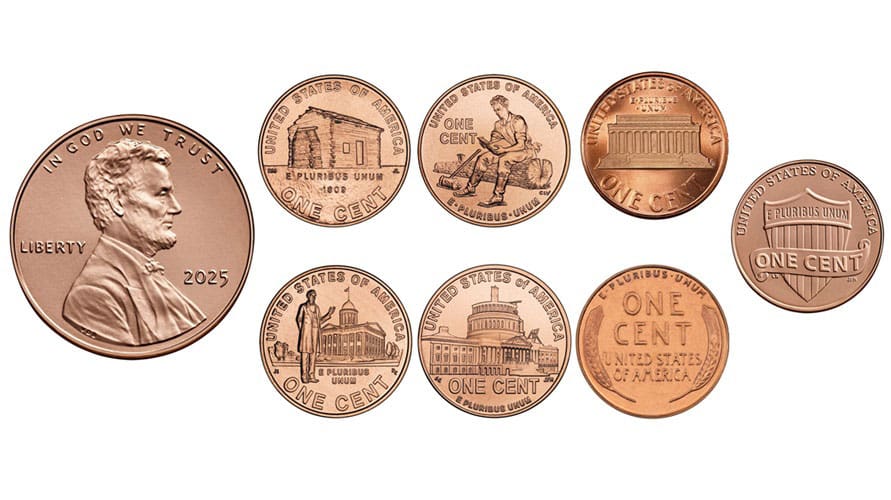 The penny, first authorized by the Coinage Act of 1792, has long played a role in daily American life. However, economic and production factors, combined with evolving consumer behavior, have made its continued production unsustainable.
Over the past decade, the cost of producing each penny has risen from 1.42 cents to 3.69 cents per penny.
While circulating production has ceased, the penny remains legal tender. There are an estimated 300 billion pennies in circulation, far exceeding the amount needed for commerce. Retailers and other businesses can continue to price goods and services in one-cent increments.
The penny was one of the first coins made by the U.S. Mint after its establishment in 1792. The design on the first penny was of a woman with flowing hair symbolizing liberty. The coin was larger and made of pure copper, while today’s smaller coin is made of copper and zinc.
Liberty stayed on the penny for more than 60 years. In 1857, the coin got smaller and the metal composition changed to 88% copper and 12% nickel. With these changes came new designs. In 1857 and 1858 the new coins featured a flying eagle on the obverse and a wreath on the reverse. The “Indian Head” design appeared from 1859 to 1909.
In 1909, Abraham Lincoln became the first president featured on our coins in honor of his 100th birthday. The Lincoln penny obverse showed the image of Lincoln designed by Victor David Brenner that is still used today. From 1909 to 1958 the reverse featured two sheaves of wheat. From 1959 to 2008, the reverse was an image of the Lincoln Memorial designed by Frank Gasparro to commemorate Lincoln’s 150th birthday. In 2009, the Mint issued four different pennies throughout the year as part of the Lincoln Bicentennial One Cent Program. The program recognized Lincoln’s 200th birthday and the 100th anniversary of the first Lincoln cent. The themes on the reverses represented the four major aspects of Lincoln’s life.
The “Union Shield” theme is the current design of the U.S. one-cent coin. The U.S. Mint first issued this design in 2010. The obverse (heads) shows the image of President Abraham Lincoln used on the penny since 1909. The shield on the reverse (tails) represents Lincoln’s preservation of the United States as a single country.
“Today the Mint celebrates 232 years of penny manufacturing,” said Kristie McNally, Acting Mint Director. “While general production concludes today, the penny’s legacy lives on. As its usage in commerce continues to evolve, its significance in America’s story will endure.”
The Mint will continue to produce numismatic versions of the penny in limited quantities for historical and collector purposes.