When remembering Pulse and the 49 lives lost, it is so important to look to the victims, the survivors and the families not the City of Orlando.
The City of Orlando and Mayor Buddy Dyer have been exposed for numerous Pulse scandals since the tragedy. They have systematically ignored the concerns of victims, survivors and families, and Dyer’s city government has attempted to hijack and control the narrative – maybe to cover things up, maybe to capitalize off a tragic terrorist attack, but definitely not because they have the best interests of the victims, survivors and Pulse families.
Orlando Mayor Buddy Dyer and the city government have let down the victims, survivors, Pulse families and the community since the beginning, but it continues still today, ten years later, with unanswered questions, unfulfilled public records requests, and a push for a memorial that resembles some kind of tourism lure and a museum, instead of a solemn, peaceful memorial. At every step, Mayor Dyer and other local politicians have sought the spotlight when talking about Pulse. Grief is not a press release. It is a scar. And the victims, survivors and families truly carry that scar.
In fact, Pulse Families and Survivors for Justice, a grassroots collective of those affected both directly and indirectly by the mass shooting at the Pulse Nightclub in Orlando, Florida on June 12, 2016 that is made up of survivors, families of those murdered, and members of the local LGBTQ+ community, has been working to raise public awareness and serve as a watchdog over the city and mayor. Their goal is to “develop a people’s history of the Pulse shooting that is told by the families, survivors, and local advocates, is supported by documented facts, and is not a sanitized narrative that serves the special interests of local law enforcement, politicians, nonprofits, area tourism, and the nightclub owner Barbara Poma.”
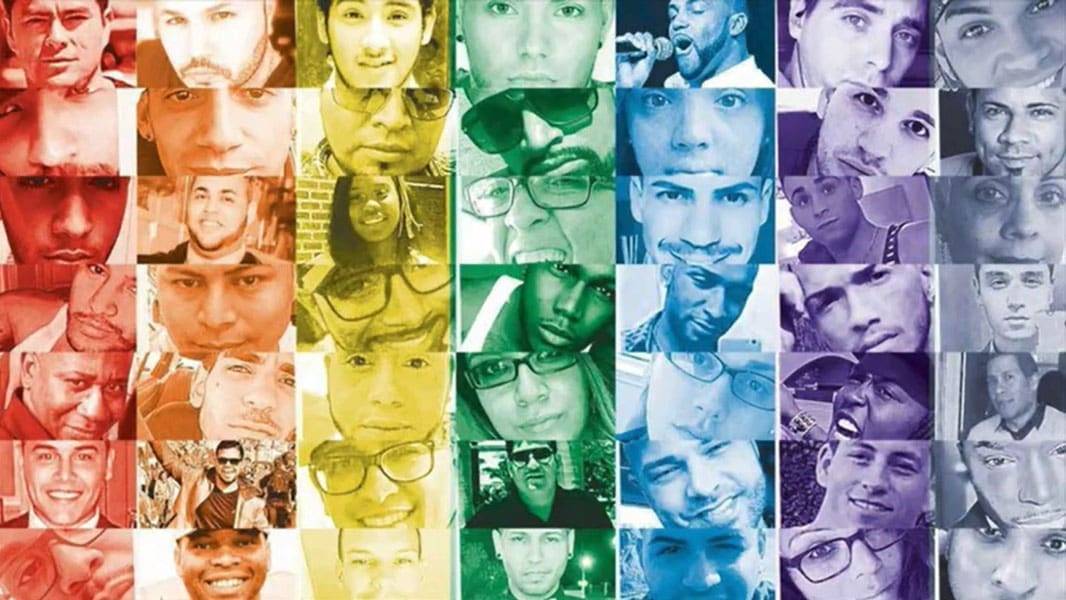 The groups has been resisting the City of Orlando’s corruption, lies, and coverup, as well as their revictimizing Pulse Memorial Committee process and the exploitative “First Response Collecting” among many other issues. Because of their work and public records requests, so much has been exposed including:
City of Orlando Lied, Hid Pulse Photos of Blocked Door from Public for 9 Years
PULSE Survivors Call Out The City of Orlando
City of Orlando, Mayor Buddy Dyer Exposed for Pulse Scandals
Is City of Orlando Obstructing Justice by Preventing Pulse Building Inspection?
The City of Orlando and Mayor Buddy Dyer simply can’t be trusted with the narrative of this devastating tragedy. Orlando Mayor Buddy Dyer refused to step down from his role on the defunct and corrupt OnePULSE Foundation Chairman’s Ambassador’s Council despite calls from a community coalition that said there were clear conflicts of interest.
Buddy Dyer’s city government allowed Pulse to operate as a death trap. Illegal, unpermitted renovations completed at Pulse left patrons trapped inside the building, obstructed their escape to safety, and caused additional injury, according to Pulse Families and Survivors for Justice. Dyer’s Chief of Staff Heather Fagan and his official spokesperson Ashley Papagni lied for years and prevented the truth from coming out. Dyer’s City Clerk’s office under Stephanie Herdocia and now-deptuy clerk Danielle Abdul-Nabi hid records, prevented their release and even attempted to charge Pulse advocates hundreds of thousands of dollars for public records – yes, hundreds of thousands of dollars. All involved should resign in shame.
Pulse survivor Jorshua N. Hernández Carrión sent these questions directly Orlando Mayor Buddy Dyer, Chief of Staff Heather Fagan, Public Information Manager Ashley Papagni, and Commissioner Patty Sheehan – but he only received an empty response from Fagan with no answers, nor any offer of help to find the answers:
The City has the answers to these questions. Only the City can provide those answers to us. We desperately need closure on these issues pertaining to the City. Please, don’t let us go another year without providing us answers to these questions:
Building Inspections: When was the last time the PULSE had a building inspection by the City? Not an exit check or Fire Department inspection, but a full building inspection?
We have not seen a single record of an actual building inspection done on Pulse and the 2004 record says there was a “hold with override” put on the last entry in its permitting records.
We know that the City called off the inspection that was to be done by Fire Marshal Tammy Hughes, specifically to document code violations. Who made the decision to not inspect PULSE and to call this inspection off?
Why did the City, after it purchased the building and before the 2025 site visits, not allow victim advocates to pay for an independent building inspection for us to have proper documentation?
OPD Investigation: When the Orlando Police Department conducted its involuntary manslaughter investigation into the Pomas for the unpermitted renovations and code violations at PULSE, why did they not record its interviews with city staff? They recorded interviews with survivors/families.
What questions were asked?
If there are no recordings, are there transcripts of those interviews?
Since the Pomas employed OPD officers for years and had a close relationship with the City, even having a BBQ restaurant inside City Hall and working directly with the City’s former Chief Protocol Officer Earl Crittenden as Chairman of the onePULSE Foundation, why didn’t the OPD refer this investigation to the FDLE or another law enforcement agency due to obvious conflicts of interest. This investigation had to do with code violations that the City never enforced. The City was essentially investigating itself. Isn’t this a serious ethics violation? Why does the City think that this investigation isn’t biased and can be trusted by survivors?
Exits and Safety Statements:
In 2016, the City: Claimed that there were “no obstructed exits” and “no obstructed aisles.” Stated: “we don’t believe there were any life/safety issues inside the building that would prevent people from getting out of the building or rescuers from getting in.”
“We have no indication that exits were blocked at the time of the incident.”
But photographs and the experiences of survivors tell a different story as does the City’s own records. How can the City reconcile its prior statements with its own evidence, made public nine years after the shooting?
Walls and Escape Routes: In 2016, the City stated, “we understand, a wall was removed which would have made it easier for people to move around.” But, walls were also added around designated exits that were not actual exits at all because they led to areas enclosed by an illegal, unpermitted fence that violated city code. Why did the City choose to spotlight a removed wall, but not mention the narrow corridors around designated exits that hindered victims’ ability to escape by forcing them through narrow passageways?
Conditional Use Permit and Nightclub Operations: Did PULSE operate as a nightclub in violation of its conditional use permit?
Did PULSE’s conditional use permit allow it to operate as a nightclub, with a dancefloor, and entertainment venue that charged nightly covers? Or, did the conditional use permit restrict the Pomas to operating PULSE as a restaurant with a martini bar with a specific floor plan that was not in compliance at the time of the shooting? The OPD investigation determined that PULSE was in violation of its conditional use permit, even as the Office of the Mayor denied it.
Did altering the approved floor plan through unpermitted renovations violate Pulse’s conditional use permit?
Did the City’s zoning law differentiate a nightclub/dancehall from a restaurant (eating and drinking establishment)? Are these two different uses, as stated in the City’s code and by City zoning officials?
Why did PIO Ashley Papagni state that nightclubs and restaurants are the same use and both were considered eating and drinking establishments, in direct contradiction to written statements made by the City’s zoning and development officials?
Outdoor Patio Permit: Did Rosario Poma pull a permit for the outdoor patio? If not, then why did code enforcement claim that Pulse had the permit and why did they close the complaint made against the nightclub for this violation? Does the City admit that its Permitting Division made mistakes when it came to enforcing compliance at PULSE? Why did the City allow PULSE to operate with so many violations for 12 years? The City’s code enforcement is known for its heavy use of citations and fees for code violations, but for some reason PULSE owners never received a single citation. Why?
Why did Timothy Johnson receive a promotion after the shooting; after Fire Marshal Tammy Hughes indicated in text messages that “TJ” was going to have to answer some tough questions as to why he allowed the violations at Pulse?
Fence and Emergency Exits: Did the PULSE fence violate city codes in terms of placement and height? Did the fence have the proper emergency hardware on its gates, as photographed by the City? Why wasn’t the lack of emergency hardware ever cited by the Fire Department?
The City claims that Pulse had six “exits,” but four emptied into fully-enclosed areas; areas enclosed by the unpermitted fence. Therefore, these were not real exits. Does the City admit there were only two doors that actually provided unobstructed egress and led directly outside? The main entrance, where the shooter entered, and the double door exits in the South side of the building?
Occupancy and Over Capacity: Does the City have any documented evidence that PULSE was not over capacity on the night of the shooting?
Will the City admit that the legal capacity limit was 299 and that the FBI validated at least 304 victims/survivors, showing that it was over capacity.
Does the City acknowledge that there were additional survivors who did not apply for financial assistance through the City’s oneOrlando Fund who take this number even higher?
Before it became PULSE, Lorenzo’s restaurant had a maximum capacity of 75. The Pomas did not expand the building legally and the building maintained the same square footage. How did the City come up with the 299 capacity? Where is the occupancy load evaluation for this and did the Fire Department use the nightclub’s unpermitted building plans and furnishings (i.e. stripper stages) when calculating this? Will the City finally provide this documentation to survivors?
Police Response: At what exact time did police enter the building? Did the first police officers on scene, including Det. Adam Gruler, act in accordance with nationally-established Active Shooter Protocol?
Records and Evidence Handling: Did the Office of the Mayor try to destroy evidence of PULSE’s permitting records, code violations, or anything else pertaining to the building—including, “wiping the City’s backup server” as alleged by Commissioner Shan Rose?
These 49 questions about Pulse Orlando were also posed to the City of Orlando in regards to the issues around the Pulse nightclub, the City of Orlando, unpermitted renovations, and code violations, and all questions were based on public records that were uncovered:
Pulse Families and Survivors For Justice also released first responders audio recordings that the city never released to the public.
So when you remember Pulse in Orlando, look to victims, survivors and families. This is about them:
Akyra Monet Murray
Alejandro Barrios Martínez
Ángel Luis Candelario Padró
Anthony Luis Laureano Disla
Antonio Davon Brown
Brenda Lee Márquez-McCool
Christopher Joseph Sanfeliz
Cory James Connell
Christopher Andrew Leinonen
Juan Ramón Guerrero
Darryl Roman Burt II
Deonka Drayton
Eddie Jamoldroy Justice
Edward Sotomayor Jr.
Enrique L. Rios
Eric Ivan Ortiz-Rivera
Frank Hernández Escalante
Franky Jimmy De Jesús Velázquez
Geraldo A. Ortiz Jiménez
Gilberto Ramón Silva Menéndez
Jason Benjamin Josaphat
Javier Jorge-Reyes
Jean Carlos Méndez Pérez
Luis Daniel Wilson León
Jean Carlos Nieves Rodríguez
Jerald Arthur Wright
Joel Rayón Paniagua
Jonathan Antonio Camuy Vega
Juan Chavez Martinez
Juan Pablo Rivera Velázquez
Kimberly Jean Morris
Leroy Valentín Fernández
Luis Daniel Conde
Luis Omar Ocasio-Capo
Luis Sergio Vielma
Martin Benítez Torres
Yilmary Rodríguez Solivan
Mercedez Marisol Flores
Amanda Lizette Alvear
Miguel Ángel Honorato
Oscar Ambiorix Aracena-Montero
Paul Terrell Henry
Peter González-Cruz
Rodolfo Ayala Ayala
Shane Evan Tomlinson
Stanley Almodóvar III
Simón Adrián Carrillo Fernández
Tevin Eugene Crosby
Xavier Emmanuel Serrano Rosado