


Florida has enacted new legislation with a transformative approach to tackling the pollution associated with septic tanks.
SB 796, titled General Permits for Distributed Wastewater Treatment Systems (DWTS), became effective July 1st and codifies a new category of wastewater treatment that is optimized to provide municipal wastewater treatment services to areas of Florida that are out of reach of conventional underground sewer systems.
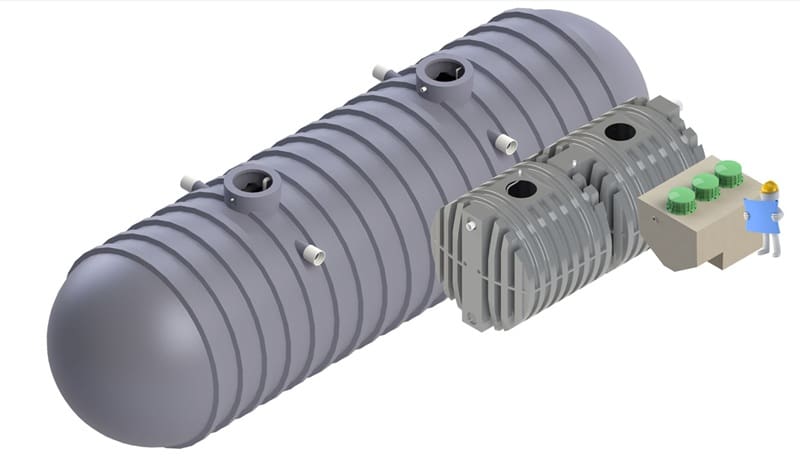 The new Florida Statute, 403.814(13), does the following:
- Defines distributed wastewater treatment systems (DWTS), which is an “integrated system approach to treating wastewater” using multiple, individual distributed wastewater treatment units (DWTU)
- Establishes a “best in class” treatment standard for the newly defined category of wastewater treatment, requiring a DWTU to achieve 80% nitrogen removal from the waste stream under continuous remote control by a professional operator
- Grants a general permit for the replacement of septic tanks in a DWTS – replacements can begin with a 30-day notice and without additional permitting from the Department of Environmental Protection or the Department of Health
- Designed for operation by a City or County, DWTS provides an immediate and cost-effective option to replace septic tanks in otherwise impossible to reach locations
- A septic tank can be replaced with a DWTU in a single day, without disrupting streets or neighborhoods
Once again, Florida has set the standard for the nation in innovation, and there is now an important new tool that will enable communities to solve their septic tank pollution problem.
OnSyte Performance, which develops, markets, and operates proprietary distributed wastewater treatment solutions and services that reduce groundwater pollution and provide utility-like simplicity beyond the reach of traditional sewer systems, said they were looking forward to supporting Florida municipalities in implementing DWTS solutions and making the most of this opportunity from the new legislation.


Wonder if a study has ever been done comparing leaking septic tanks v. millions of gallons spilled by processing plants?