BayCare Health System’s successful effort to address nurses’ stress is expanding across all 16 of its acute-care hospitals in 2025.
The nurse well-being program will spread to more than 160 inpatient units, following a successful three-year pilot that significantly improved staff retention, communication and workplace culture.
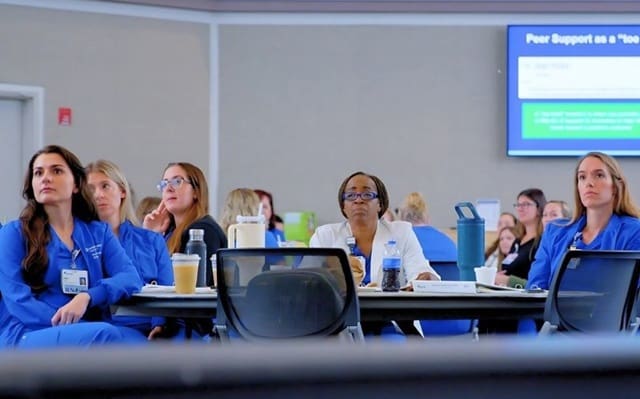 The program, Nurse Well-Being: Building Peer and Leadership Support, was originally piloted in select units over the past three years. Results from St. Joseph’s, St. Anthony’s and Winter Haven hospitals showed dramatic improvements in nurse burnout, workplace communication and turnover rates—key concerns in a post-pandemic health care environment.
The pilot program’s key improvements and outcomes included:
- 34% reduction in overall burnout
- 82% increase in positive perceptions of leadership
- 34% improvement in perceived staffing levels for quality care
- 26% increase in meaningful conversations around patient care
- 0% turnover rate in the first year for new hires in four pilot units
Building on that success, BayCare began rolling out the program systemwide, starting with children’s and women’s units. The expansion continued, coinciding with national efforts to spotlight Mental Health Awareness Month.
“The nurse well-being program shines a light on ways we can help our nurses build resilience, navigate workplace challenges and develop strategies to maintain their well-being,” said Trish Shucoski, DNP, MSN, RN, NEA-BC, chief nurse executive at BayCare. “The expansion of the program is a testament to our commitment to nurse well-being. By fostering a supportive environment, we are not only enhancing the health of our nurses but also improving patient care outcomes.”
BayCare was one of four health systems in the nation selected by the American Nurses Foundation (ANF) for the pilot project, Nurse Well-Being: Building Peer and Leadership Support, which features the Stress First Aid (SFA) program, a peer-to-peer model originally designed for high-stress professions like the military and first responders. The program is partially funded by a grant of almost $500,000 received by BayCare from the ANF.
“Our team members are our greatest asset at BayCare. Prioritizing their well-being is not just a responsibility, but a commitment to fostering a supportive and thriving work environment,” said BayCare President and CEO Stephanie Conners.
The SFA model is a self-care and peer support model that represents a balance between job demands and resources, focusing on team member well-being. It provides a shared framework and a common language for discussing stress and improving communication.
“This isn’t just another training or checklist — it’s changing the culture,” said program champion and BayCare’s advanced nursing educator, Rocky Hauch, DNP, RN, PCCN. “It’s not just about a person reaching out for help, or leadership identifying when someone is stressed. Colleagues support and look out for one another. It’s on all of us to identify the signs of stress in the people we work with.”
SFA also focuses on peer support rather than relying solely on individual recovery and wellness. This program works in collaboration with existing services like Employee Assistance Programs (EAP), nurse coaches and chaplains, making it an integrated piece of BayCare’s broader well-being strategy.
Hauch said the program is already making an impact. “Our goal now is to bring this same approach to departments beyond nursing in 2026.”
BayCare is a leading not-for-profit health care system that connects individuals and families to a wide range of services at 16 hospitals, including a children’s hospital, and hundreds of other convenient locations throughout the Tampa Bay and West Central Florida regions.